

Automated threat modeling for secure-by-design software development
AI scales how fast you ship code; threat modeling keeps security ahead of it. ThreatCanvas turns text, diagrams, IaC, or code into threat models with recommended
controls, and pushes traced work items to Jira or Azure DevOps. Work in the GUI or let AI agents drive it via MCP and APIs. Security is built in, with an audit trail to prove it.
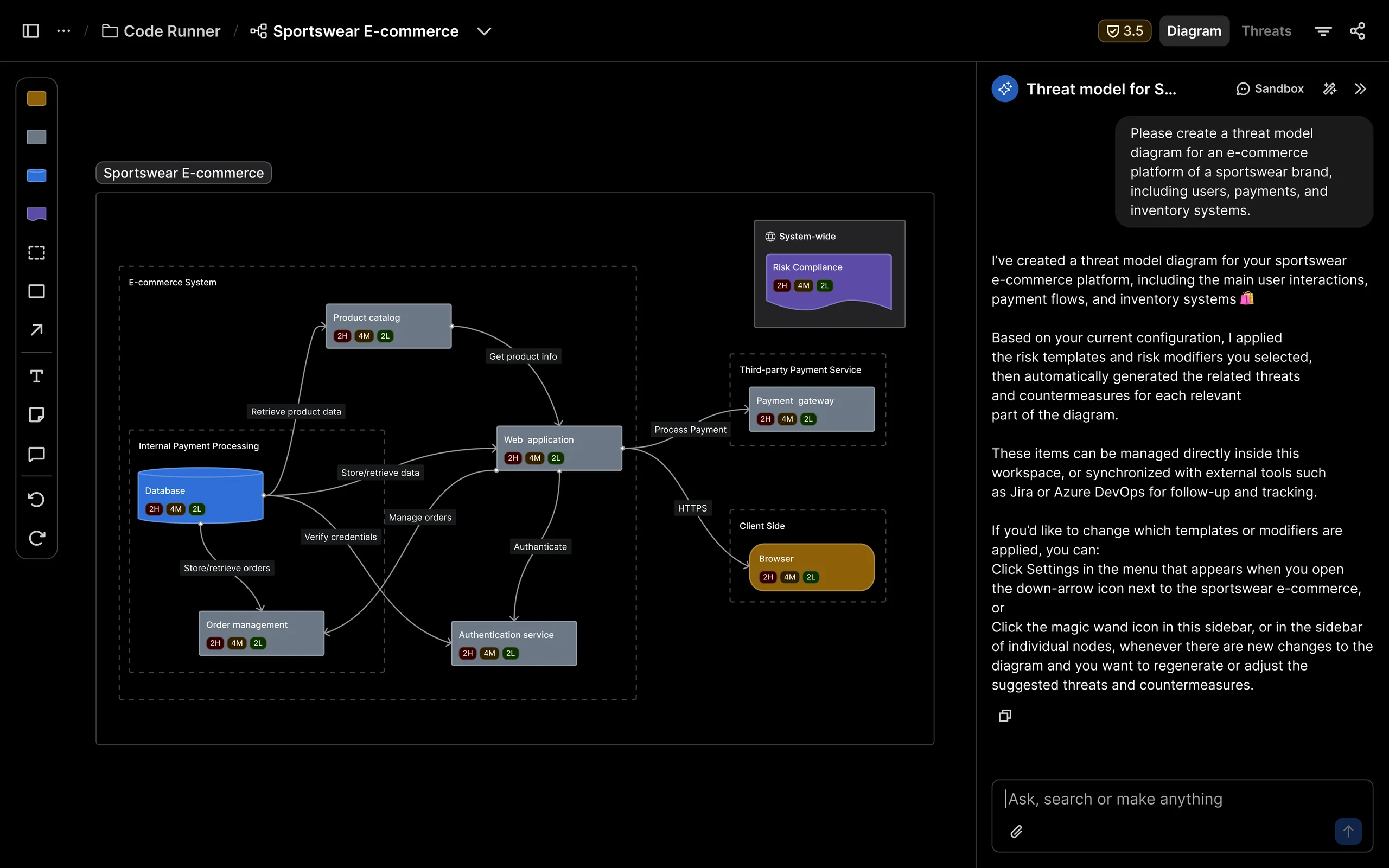
Speed without threat modeling is unmanaged risk
Identifying risks at the design stage is faster, cheaper, and more effective than finding them in production. AI has changed the pace. Every feature it writes is an attack surface someone has to defend, and traditional threat modeling is too slow, too specialist-dependent, and too disconnected from delivery to keep up. ThreatCanvas changes that.


Fast enough for every sprint
Auto-generate a complete threat model in minutes, not hours.

No specialist required
AI-guided modeling gives every team the expertise to threat model consistently.

Structured, auditable outputs
Every model follows a standard format, ready for review or audit.

Lives in your SDLC
Risks become Jira and Azure DevOps work items, not documents that gather dust.

Scales across your entire portfolio
One platform, every team, every application.
Automated threat modeling,
built for engineering teams
Every feature AI generates expands what you have to defend—faster than teams can track. Threat modeling exposes the risk first; secure coding training turns it into skills your developers keep.
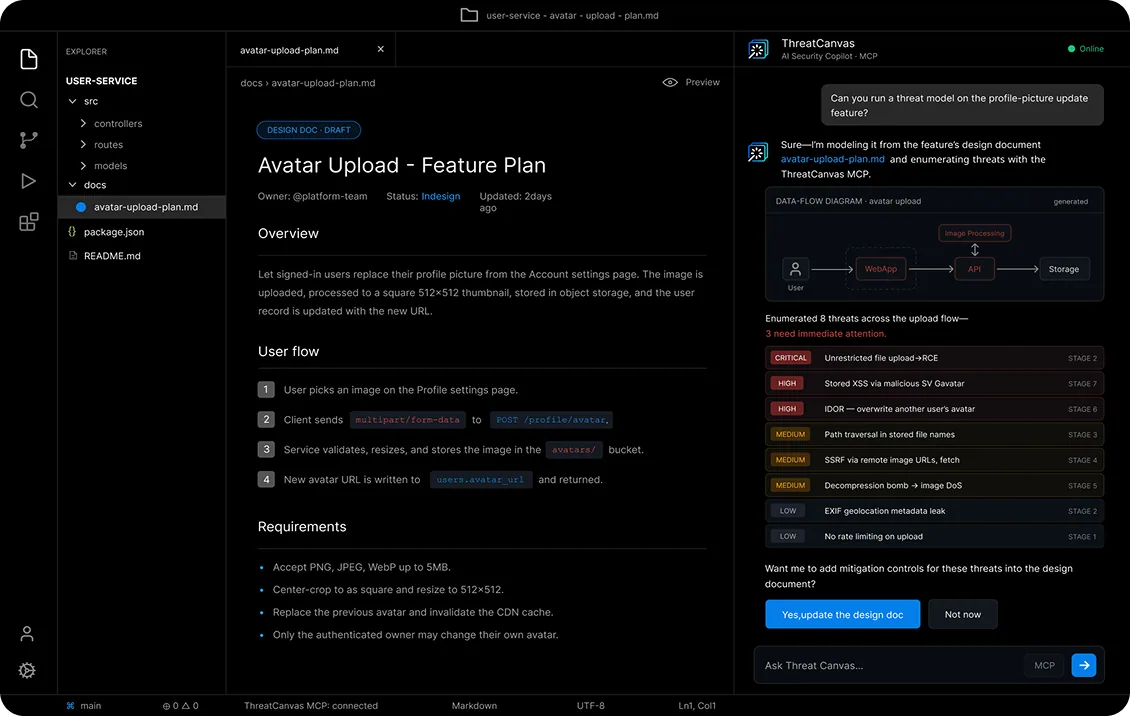
Ship secure
by design
ThreatCanvas removes the manual overhead from threat modeling
while improving consistency, traceability, and scale.

AI-powered, automated model generation
ThreatCanvas generates complete threat models from natural language descriptions, documentation, architecture diagrams, IaC or code—in seconds. Every model includes identified threats, recommended controls, and output your team can act on immediately.

Risk templates
ThreatCanvas includes pre-built risk templates for common architectures and compliance contexts—and lets teams add their own—providing a consistent, auditable starting point without reinventing the wheel for every new service.

Code Repository to Threat Model
Point ThreatCanvas at a code repository and get a threat model in under a minute. It's platform-agnostic, Docker-based, and keeps your source code private. As your codebase evolves, your threat model updates with it, creating a living model, not a static document.

Threat modeling for Jira & Azure DevOps
ThreatCanvas integrates directly with Jira and Azure DevOps, pushing traced security work items at the epic level. Risks don't disappear into a PDF; they become backlog items, assigned, tracked, and closed like any other engineering work.

Threat modeling MCP and APIs
Embed threat modeling directly into your toolchain. With ThreatCanvas MCP and APIs, you can generate models automatically inside your agent workflows or CI/CD pipeline, turning threat modeling from a point-in-time exercise into a continuous part of how you build.

Report generation
Generate AI-powered audit reports at the click of a button or via API. ThreatCanvas produces structured, reviewable outputs that give compliance and audit teams the evidence they need, without pulling engineers away from delivery.

Training integration
When ThreatCanvas surfaces a threat, SecureFlag can close the skills gap that created it. Threat findings are connected directly to relevant secure coding training labs, so developers build the knowledge to prevent the same risks from reappearing.

Proven Impact
Dramatically reduce security vulnerabilities and achieve clear ROI. Our platform seamlessly integrates threat modeling into your workflow, empowering teams to identify and mitigate risks early with actionable insights and automated compliance reporting.
A threat model for every application,
in under a minute
Point ThreatCanvas at a code repository. Get a complete threat model before your next meeting.

Platform-agnostic
Works with any codebase, any stack, any CI/CD pipeline.

Source code stays private
Docker-based, runs within your own environment.

Living threat models
As your code evolves, your model updates with it.

No security experts required
No specialist needed in the room.
Threat modeling
for modern AI architectures
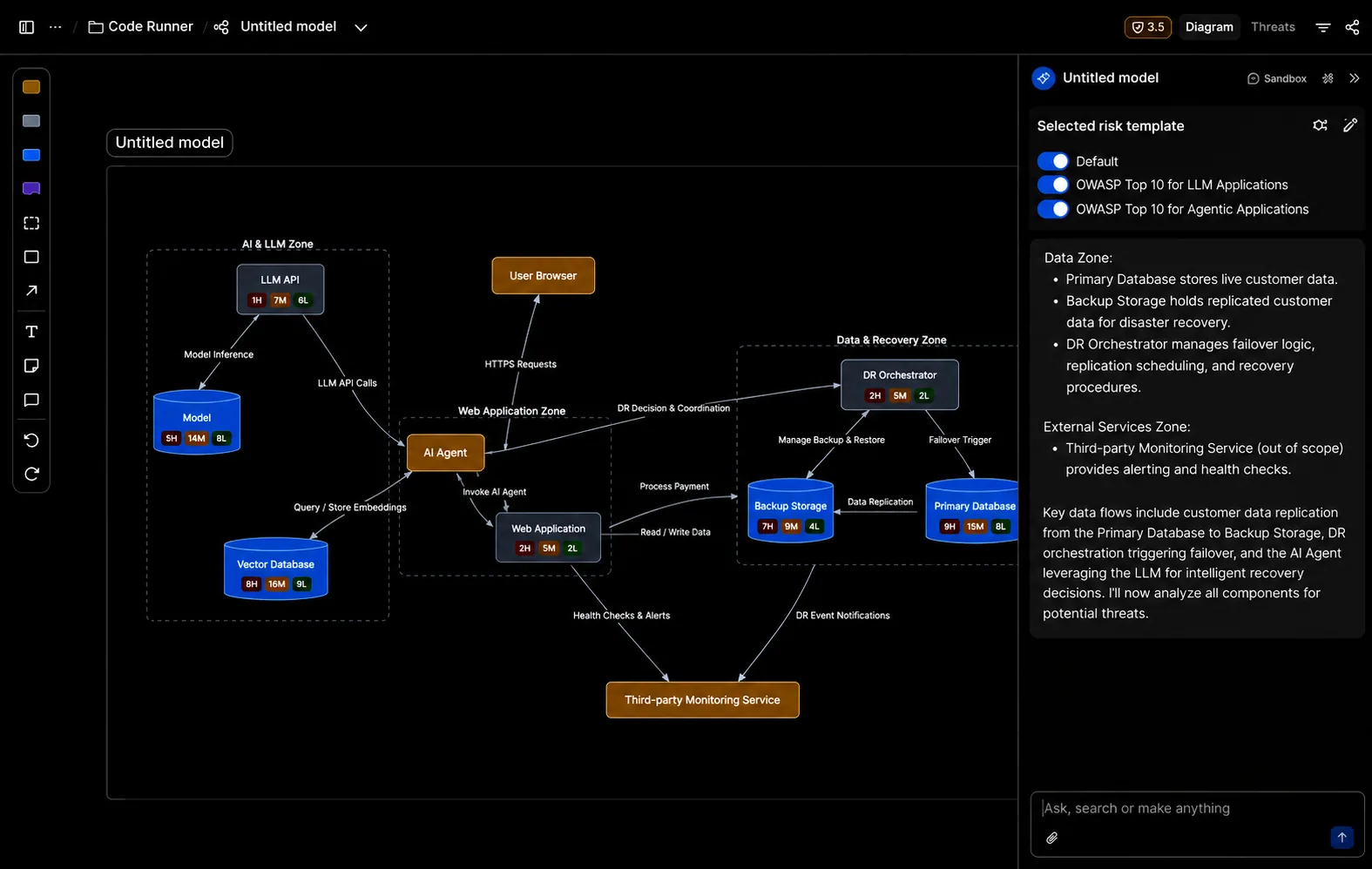
AI‑assisted development introduces risks that traditional threat modeling struggles to keep up with. ThreatCanvas includes dedicated risk templates for LLMs, agentic systems, and AI‑generated code, helping teams mitigate threats before they reach production.
Automated threat modeling
across the SDLC

Designing new applications securely
Generate a complete threat model directly from architecture designs, diagrams, or IaC before development begins. Teams identify and prioritize risks early, defining security controls upfront and avoiding costly rework later.

Scaling security across large application portfolios
Standardize secure design practices across teams and technologies using consistent templates and automated outputs. Security teams gain broad coverage without becoming a bottleneck.
Keeping pace with agile delivery
Auto‑generate threat models in seconds during sprint planning or as part of CI/CD workflows. Risks are pushed directly into Jira or Azure DevOps, making threat modeling fast enough for every sprint.
Turning security findings into developer capability
Connect identified risks directly to relevant secure coding and threat modeling labs. Developers learn why vulnerabilities occur and how to prevent them, reducing repeat issues over time.
Securing AI-Powered applications
Identify AI‑specific risks such as prompt injection, insecure agent workflows, and data leakage using dedicated LLM and agentic AI templates. Teams address emerging threats before they reach production.

Preparing for audits and security reviews
Generate structured threat models and AI‑powered reports that provide clear, reviewable evidence on demand. Compliance becomes a byproduct of good engineering practice, not a last‑minute scramble.

Gaining visibility into existing and legacy systems
Create a threat model for existing applications by pointing ThreatCanvas at a code repository. Models update automatically as the codebase evolves, providing continuous visibility without slowing delivery.
Threat modeling that builds secure design skills
ThreatCanvas doesn't stop at identifying risks. Every threat links straight to a hands-on lab, so developers don't just see the risk; they learn to design it out of future releases.
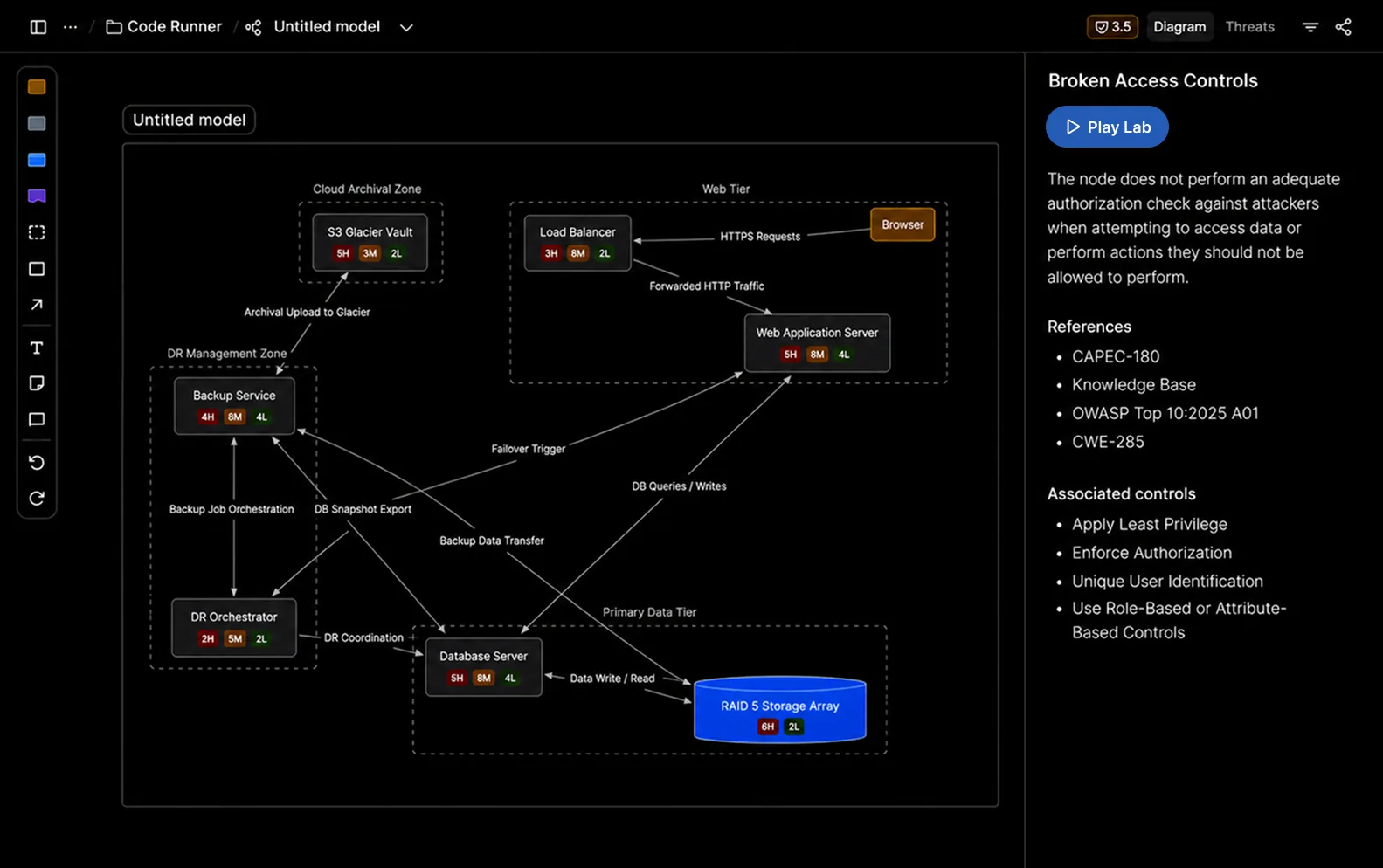
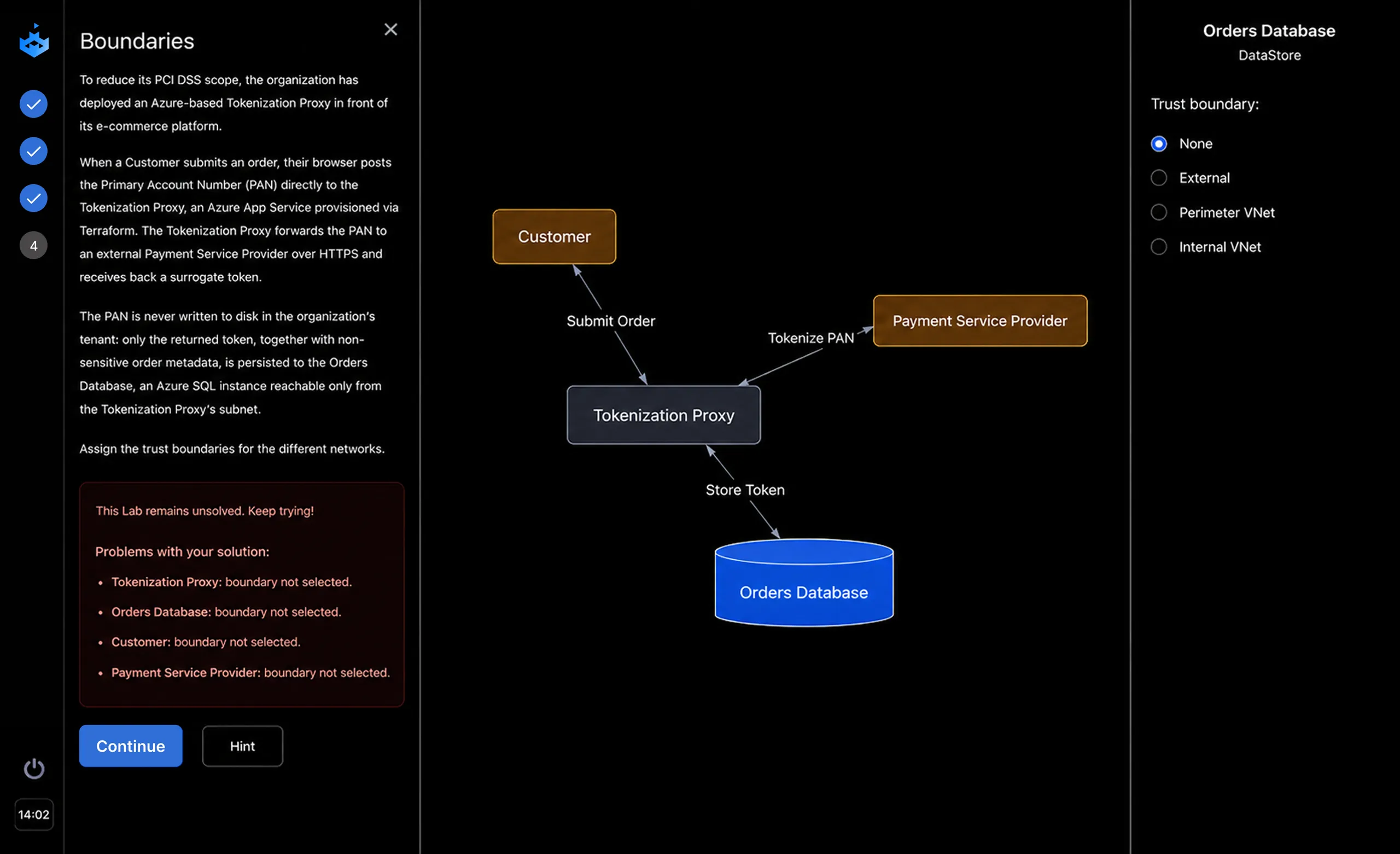
Threat modeling training included with ThreatCanvas
Threat modeling training comes built into every ThreatCanvas SaaS plan. On the SecureFlag platform, your team learns to map attack surface, reason about trust boundaries, and apply the right controls by design turning automated threat models into a skill they own.
Threat modeling for security architects,
developers, and product teams
ThreatCanvas makes cybersecurity threat modeling accessible across your organization, from AppSec teams to developers to product managers.

Security Architects
Lead threat modeling at scale with interactive models for all your applications. Standardized outputs make it easy to guide design decisions and maintain a repeatable methodology.

AppSec Engineers
Bring security upstream with design‑time risk identification. Catch vulnerabilities before code is written and turn threat models into actionable work items.

Developers
Understand security requirements early through clear threat models linked to relevant training. Learn why risks exist and how to prevent them as part of everyday development.

Product Managers
Make informed security trade‑offs during planning with clear visibility into design‑level risks. Balance delivery speed and security before implementation begins.

Compliance Officers
Generate structured, framework‑aligned threat modeling evidence to support ISO 27001, PCI DSS, HIPAA, NIST, and OWASP audits, without manual documentation.
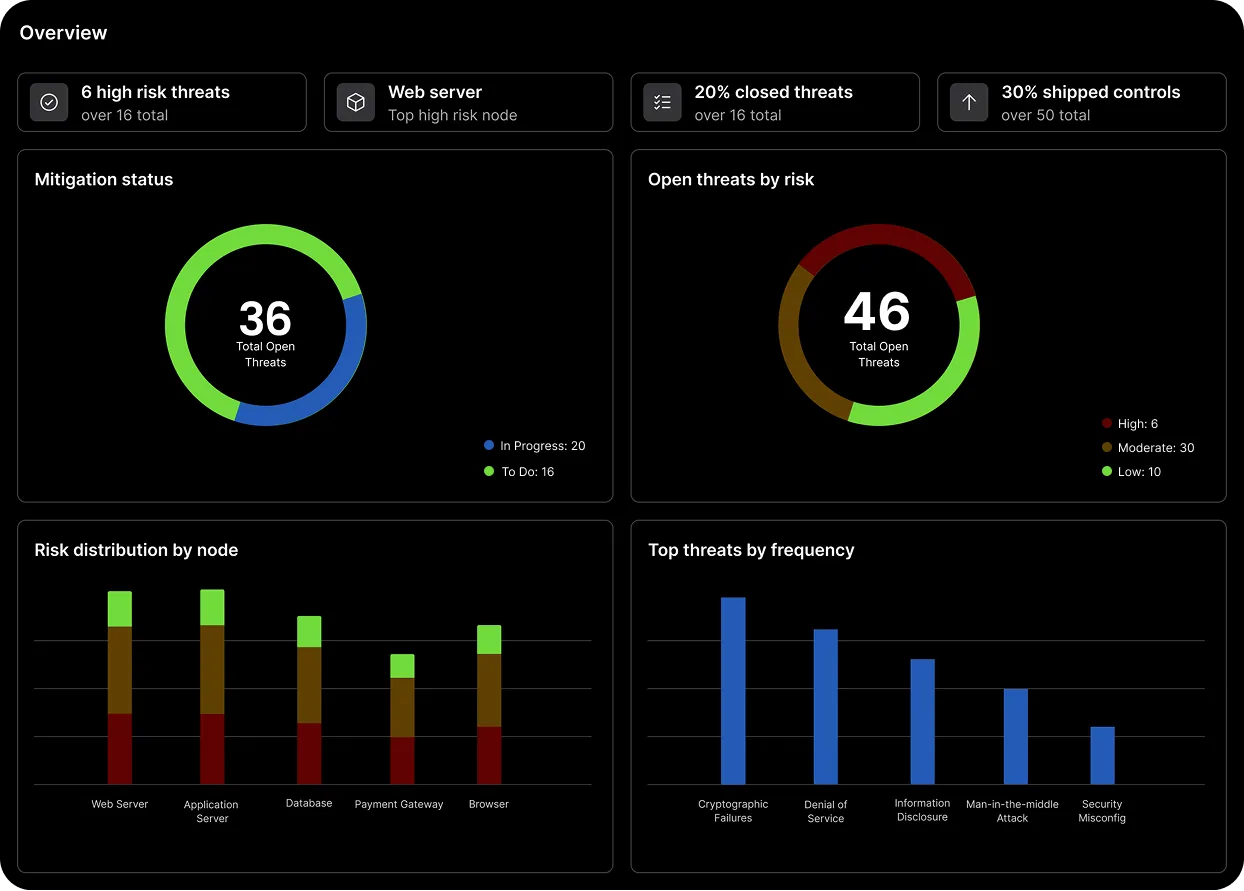
Audit-ready
by design
Produce audit‑ready threat modeling evidence aligned with NIST SSDF and ISO 27001—automatically, consistently, and without manual reporting.
Proven impact
What enterprise
leaders are saying
SecureFlag helps global engineering and security teams reduce vulnerabilities and build secure software faster.

“Very easy and quick to create an initial version of a threat model with ThreatCanvas.”
Application Security Expert
Services (non-Government)

Proudly trusted by 350+ enterprise teams worldwide


Try ThreatCanvas. Today
ThreatCanvas brings security-by-design into every sprint—with automation, collaboration, and compliance built in, and threat modeling available via GUI or MCP, so your team and your agents can both invoke it.
Frequently
asked questions
Whether you're curious, confused, or just want the quick facts, our FAQ section is here to help you find what you need—fast, clear, and hassle-free.
Effective threat modeling tools are fast, consistent, and integrated into the SDLC. SecureFlag's ThreatCanvas auto-generates threat models from designs, diagrams, or code, and pushes actionable work items directly into engineering workflows.